The Siemens Community Catalyst program was co-created with our community to acknowledge technology leaders who consistently contribute to the Siemens Community. Nominations are accepted on a rolling basis.
Dear ALL
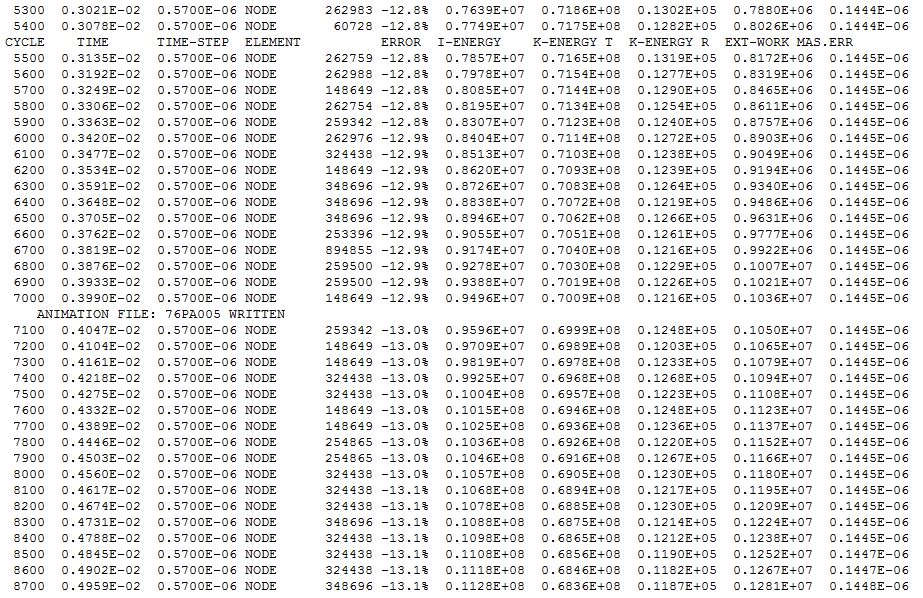
I am performing the crash analysis ( Roll over) in Radioss , during solving facing the energy error issue which is increasing in -ve percentage.
Please provide your guidelines
Thanks
RAM
<?xml version="1.0" encoding="UTF-8"?>
Hi Ram,
Negative energy is seen when energy is dissipated from system. There could be lot of reasons for the same, it could be because of damping or hour glass, etc...
Review the results and see the whether they are realistic or not. Also try to use physical stabilization to reduce hour glass deformations.
Dear Prakash,
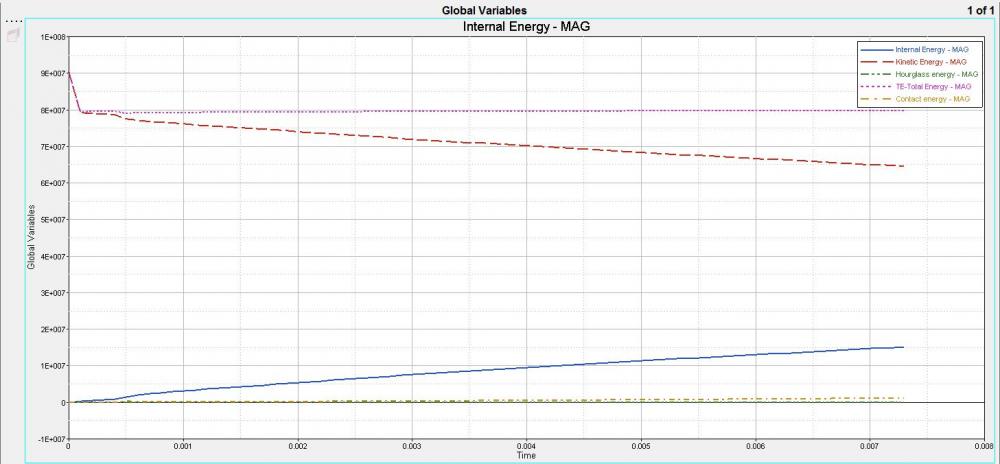
Please find the curve for the respectives ....
Ram,
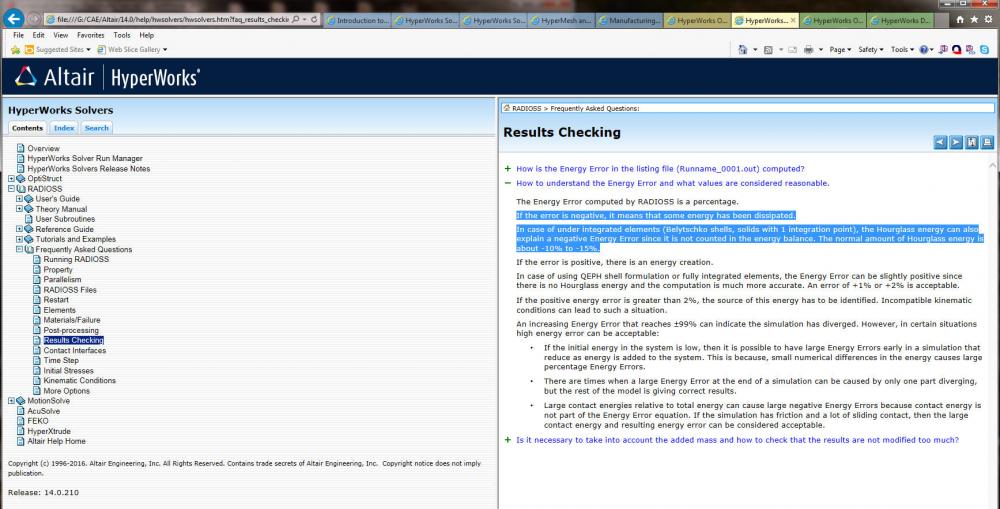
Normal hourglass energy valid upto -15% as per help. Keep the analysis going and review the results at the end.
Also notice the error is because of a node. Check if the node is involved in contacts.
Thanks for the support
Dear prakash,
Yes those nodes are involved in contact Type 7
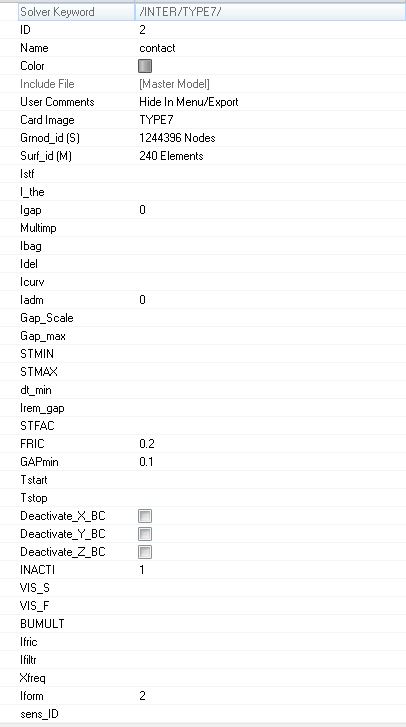
For a node, check the characteristics of connected elements. If the node is on the master side or the slave side of an interface, this interface must be verified. The gap of the interface should be verified. Try with slightly increased Gapmin value and also keep Inacti to 6.
Meanwhile also check for any penetrations in that interface.
Dear George,
I have used the values as shown in image for my contact definition Type 7
if i changed inacti to 6 it shows error in initial penetration in interface....
Please provide your guidelines and suggested the values to be used for Type 7 contact
Increase Gaping to 0.5 and try running the analysis. Keep the inacti to 6. Import the model into HyperCrash and you can check for the penetrations in the solver interfaces. You can depenetrate the nodes automatically over there.
Please check the Help Menu on check solver interfaces for HyperCrash also which explains the same.
Hi ,
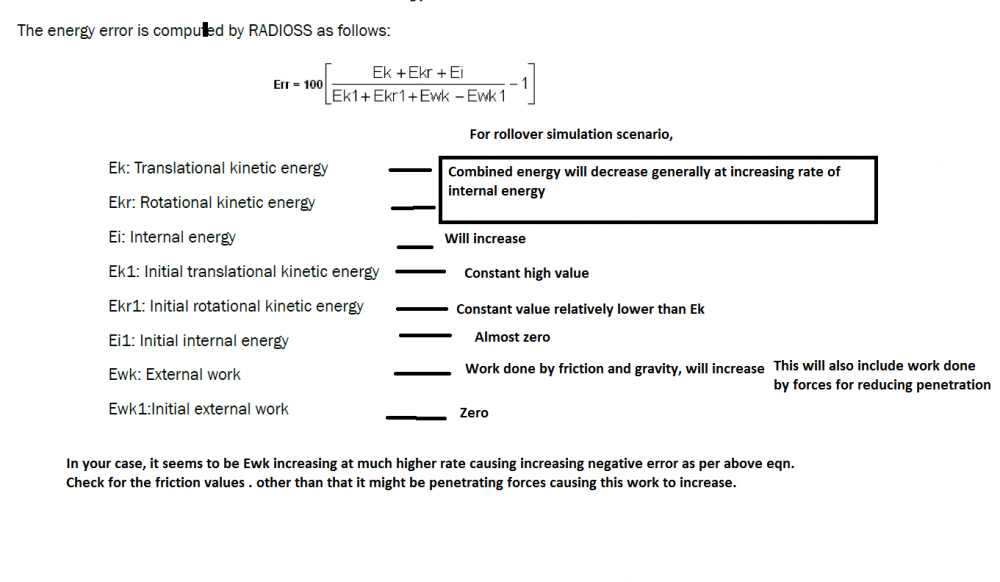
Please find the attached image for energy balance in rollover scenario.
Join us for a community conversation on how High-Performance Computing (HPC) and Simcenter PSIM work together to meet the increasing demands of modern power electronics simulation. During this one-hour technical session, you'll discover how leveraging HPC can speed up simulations, improve scalability, and empower engineers…
Join us for a community conversation on accelerating your motor simulation workflow with Simcenter Simlab. In this beginner-friendly session, we'll introduce the platform's automated model-building capabilities and show how easy it is to set up your first electric motor analysis. You'll see the basic steps of geometry…
Join us for a Community Conversation where we'll discuss practical approaches to analyzing complex electromagnetic models using hybrid solver techniques. This session will provide a general overview of how different computational methods can be combined within a single simulation to address models containing varied…