The Siemens Community Catalyst program was co-created with our community to acknowledge technology leaders who consistently contribute to the Siemens Community. Nominations are accepted on a rolling basis.
Dear All,
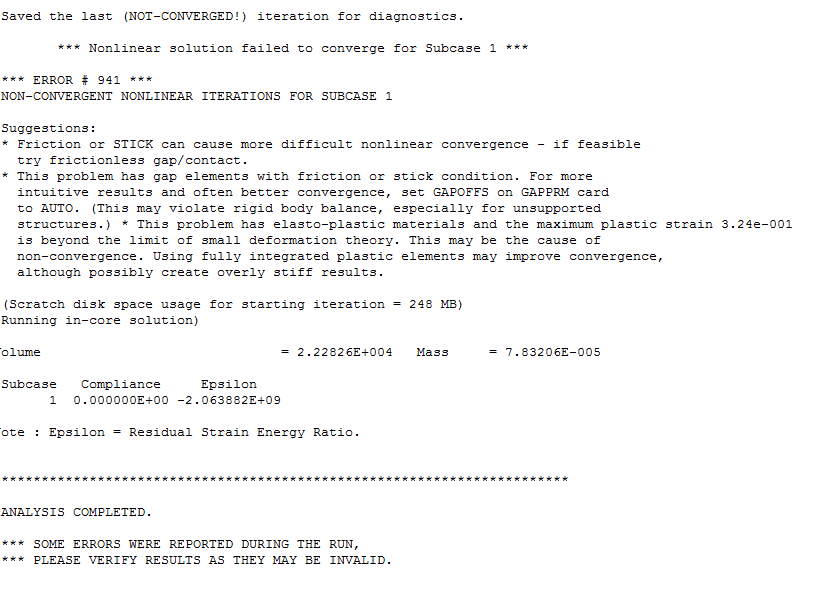
how can i resolve this error.?
Hi @Ganesh Munge
Is your problem a case of large deformation? What is the contact interface you defined? And at what load step your solution is being non-covergent? And which error value is resulting in non covergence?
Dear Nachiket,
Thanks for support,
Issue was of equivalence. I forgot to do the same. Now it is sorted out.
Dear @Prakash Pagadala, @Nachiket Kadu
Suppose
case 1:
I have an interference of 80 microns in shaft and housing and
case 2:
if i have gap of 80 micron bet same.
how can i define frictional contact contact between above cases.
can you revert with when to define search distance and when to define clearance. also, how to choose track
@Ganesh Munge
Search distance is used define contact condition between slave and master, as in only those nodes will be in contact which satisfy the search distance criteria. Clearance defines the the distance the master and slave need to move so as to be in contact.
If I have interference, What should i use clearance or search distance?
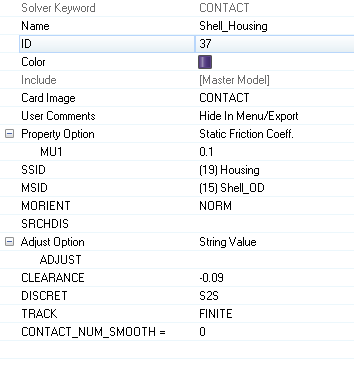
I am not sure about previous version but negative clearance in 2017.3 is defines inititial penetration. @Prakash Pagadala correct me if i am wrong!!
Is your geometry in base size or tolerances are already included?
refer this
geometry is with tolerances,
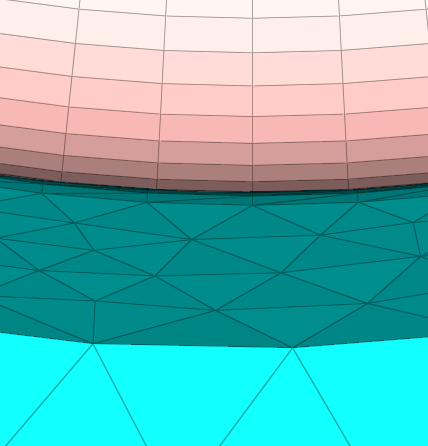
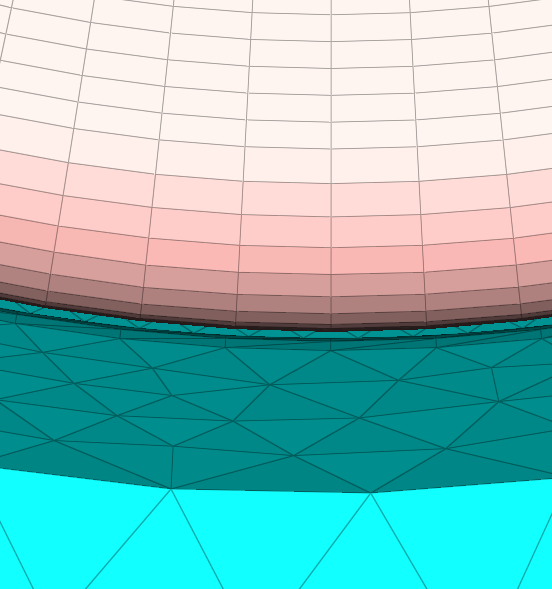
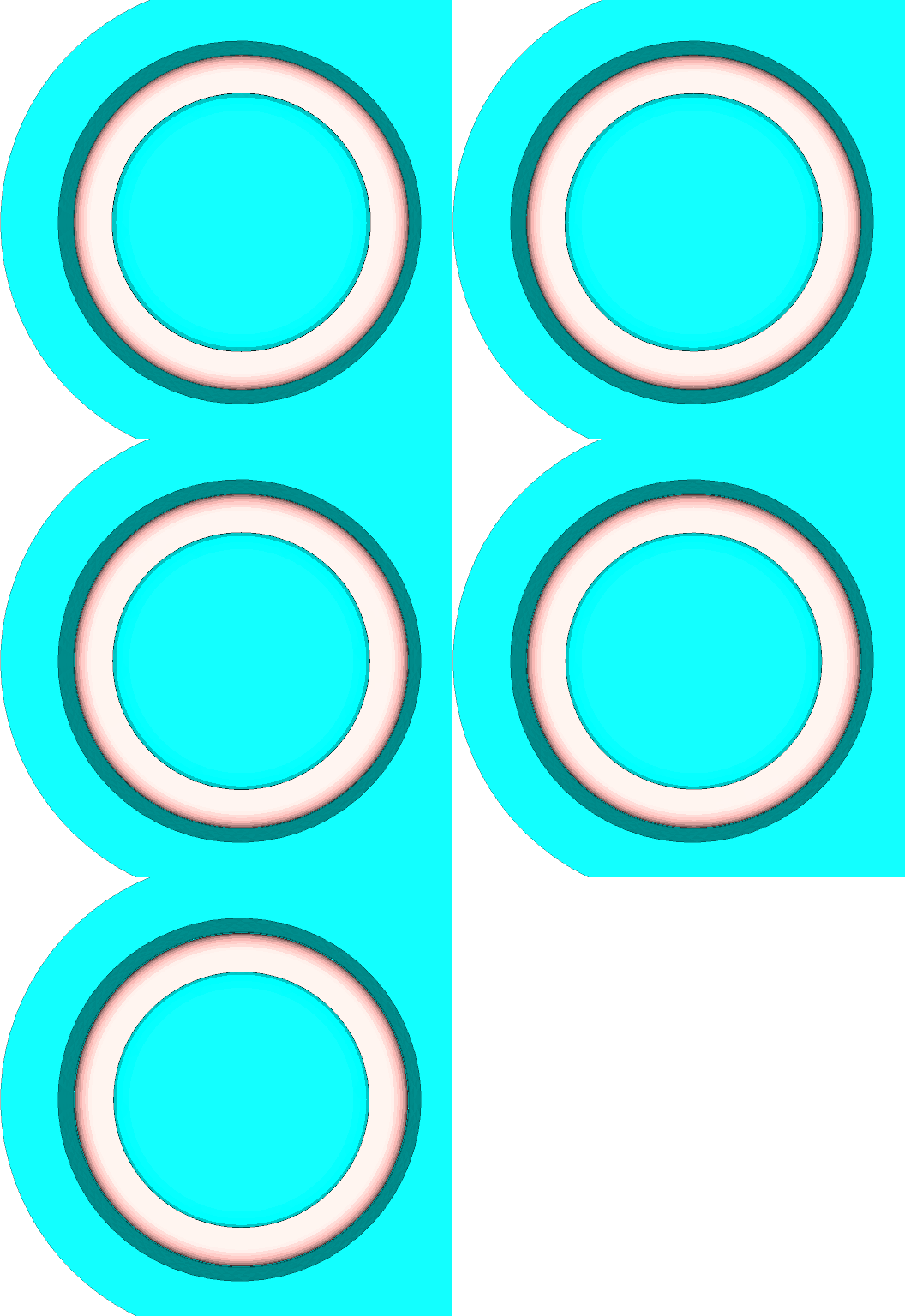
these parts are in interference fit (image1) of 80 microns, I used clearence of -0.090. but after completion of simulation it is showing gap like in image 2
geometry is with tolerances, these parts are in interference fit (image1) of 80 microns, I used clearence of -0.090. but after completion of simulation it is showing gap like in image 2 <?xml version="1.0" encoding="UTF-8"?><?xml version="1.0" encoding="UTF-8"?>
<?xml version="1.0" encoding="UTF-8"?><?xml version="1.0" encoding="UTF-8"?>
As in no contact u mean to say?
As in no contact u mean to say?
These are in contact,
Outer ring of bearing is press fitted into the housing with the above mentioned interference value.
as per physics, housing should expand and outer ring should contact.
here outer ring is getting contracted and creating gap between housing and outer ring as i showed above in Image 2.
my question is why it is showing gap?, outer ring should touch housing inner surface.
<?xml version="1.0" encoding="UTF-8"?>
These are in contact, Outer ring of bearing is press fitted into the housing with the above mentioned interference value. as per physics, housing should expand and outer ring should contact. here outer ring is getting contracted and creating gap between housing and outer ring as i showed above in Image 2. my question is why it is showing gap?, outer ring should touch housing inner surface. <?xml version="1.0" encoding="UTF-8"?>
That gap which you are mentioning you checked distance between those node?
HI,
Positive CLEARANCE is equal to the distance that slave and master surfaces have to move towards each other in order to close the contact,
Negative CLEARANCE indicates contacting bodies have initial penetrations and is equal to resolving interference-fit / press-fit problems
SRCHDIS is important in both cases.
Join us for a community conversation on how High-Performance Computing (HPC) and Simcenter PSIM work together to meet the increasing demands of modern power electronics simulation. During this one-hour technical session, you'll discover how leveraging HPC can speed up simulations, improve scalability, and empower engineers…
Join us for a community conversation on accelerating your motor simulation workflow with Simcenter Simlab. In this beginner-friendly session, we'll introduce the platform's automated model-building capabilities and show how easy it is to set up your first electric motor analysis. You'll see the basic steps of geometry…
Join us for a Community Conversation where we'll discuss practical approaches to analyzing complex electromagnetic models using hybrid solver techniques. This session will provide a general overview of how different computational methods can be combined within a single simulation to address models containing varied…