Cosite interference is a critical challenge in modern communication platforms, where multiple antennas and radios must coexist in a shared environment without degrading each other’s performance. Altair SimLab offers a streamlined workflow to evaluate, visualize, and mitigate cosite interference, combining full-wave antenna simulations, placement studies, and interference assessments.
Antenna Placement and Equivalent Models
The workflow begins with antenna placement on a complex platform, such as an aircraft. Equivalent antenna models, generated from full-wave simulations in Altair Feko or imported measurement data, are positioned on the structure. In this case study, antennas for VHF, UHF, L-band, and GPS were placed on a Learjet CAD model.
- The platform was meshed with optimized settings.
- Frequency sweeps were performed between 125 MHz and 1.58 GHz.
- Material properties, including layered dielectric definitions, were applied.
- Far-field radiation patterns and S-parameters were extracted to quantify coupling among antennas.
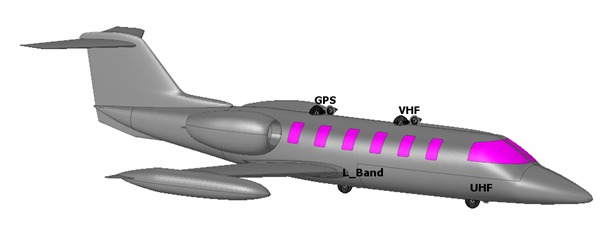
Figure 1: Antenna placed over Learjet platform
The resulting S-parameter plots revealed low mutual coupling between most antennas, with Touchstone (.sxp) and .ffe files automatically generated for subsequent analysis.
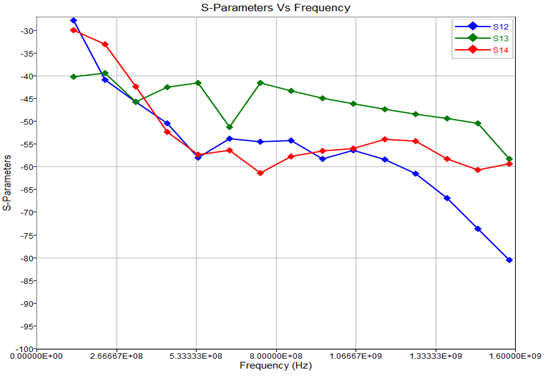
Figure 2: S-parameters (dB) plot
Cosite Interference Setup
SimLab’s Cosite Interference Solution allows to investigate performance degradations caused by transmitter–receiver interactions. Two routes are supported:
- Directly from antenna placement solutions (using solved S-parameters).
- Using imported S-parameter files in Touchstone format from measurements or other simulations.
For the Learjet setup, the first approach was followed. Each antenna was associated with specific transmitters or receivers:
- L-Band Tx (1.09 GHz)
- VHF Tx (126 MHz)
- UHF Rx (360 MHz)
- GPS Rx (1.575 GHz)
Results and Interference Matrix
The cosite solver evaluates worst-case interference scenarios. A matrix view highlights interference levels, classified by confidence margins[CM1] :
- Red: values below safe limits
- Yellow: within tolerance
- Green: acceptable[CM2]
Hovering over any matrix cell will display the exact interference type, Tx–Rx station pair, and the corresponding confidence level.
The confidence level is calculated as:

Where:
- d = difference between the receiver carrier frequency and the closest interfering transmitter frequency
- f = closest interfering frequency
In this study, GPS and UHF receivers experienced significant interference from VHF and L-band transmitters, while only the UHF Rx – L-Band Tx path was acceptable for margin limit 0 to 10. Note that these margin levels are user-defined.
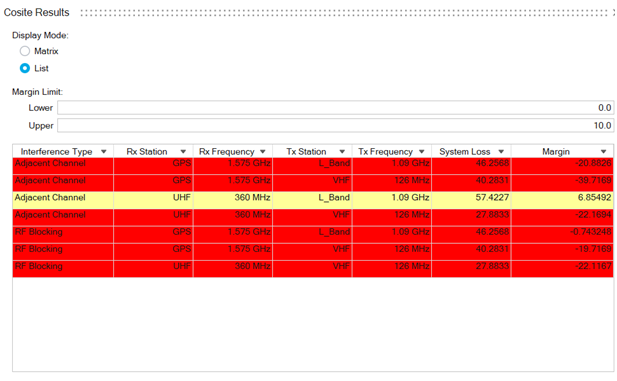
Figure 3: Cosite Interference Results
Interference Mitigation
To address these issues, band-pass filters were introduced at the antenna ports:
- BP 70 MHz for VHF
- BP 400 MHz for UHF
- BP 900 MHz for L-band
- BP 2 GHz for GPS
These equipment items—Transmitter, Receiver, Filter, Circulators, and Cables—can be defined using the ‘Equipment Catalog’ available in Simlab or created as user-defined components.
Example of Band-Pass Filter Characteristics
The characteristics of a band-pass filter can be visualized using the frequency-power table defined in the Equipment Catalog. This envelope helps verify that the filter provides adequate attenuation outside the passband while maintaining required gain within the operational band.
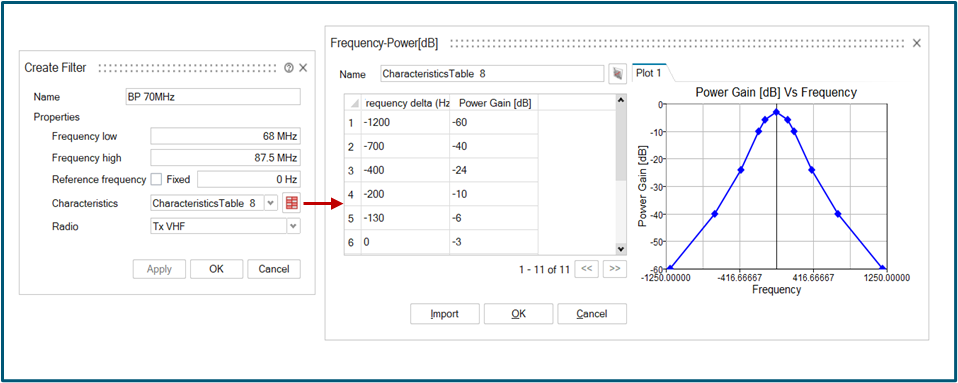
Figure 4: Example Band-Pass Envelope and Characteristics Table
After filtering, all cosite paths fell within acceptable margins. The interference was limited to adjacent channel issues, and RF blocking was eliminated.
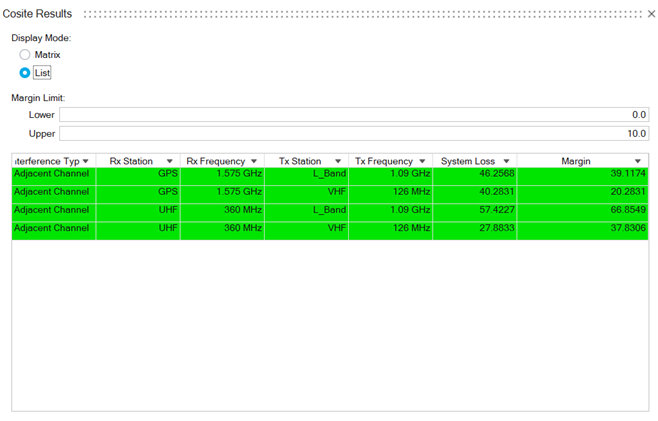
Figure 5: Cosite Interference Results after Mitigation
Conclusion
SimLab enables a complete workflow for cosite interference studies:
- Importing CAD and material definitions.
- Positioning and simulating antennas.
- Extracting S-parameters.
- Setting up interference solutions.
- Mitigating interference with catalog or user-defined equipments.
By leveraging this simulation-driven design, costly prototyping and iterative field testing can be reduced. Cosite analysis simulation in SimLab helps in ensuring the robustness of communication systems, even in densely packed multi-antenna environments.