The Siemens Community Catalyst program was co-created with our community to acknowledge technology leaders who consistently contribute to the Siemens Community. Nominations are accepted on a rolling basis.
Hello,
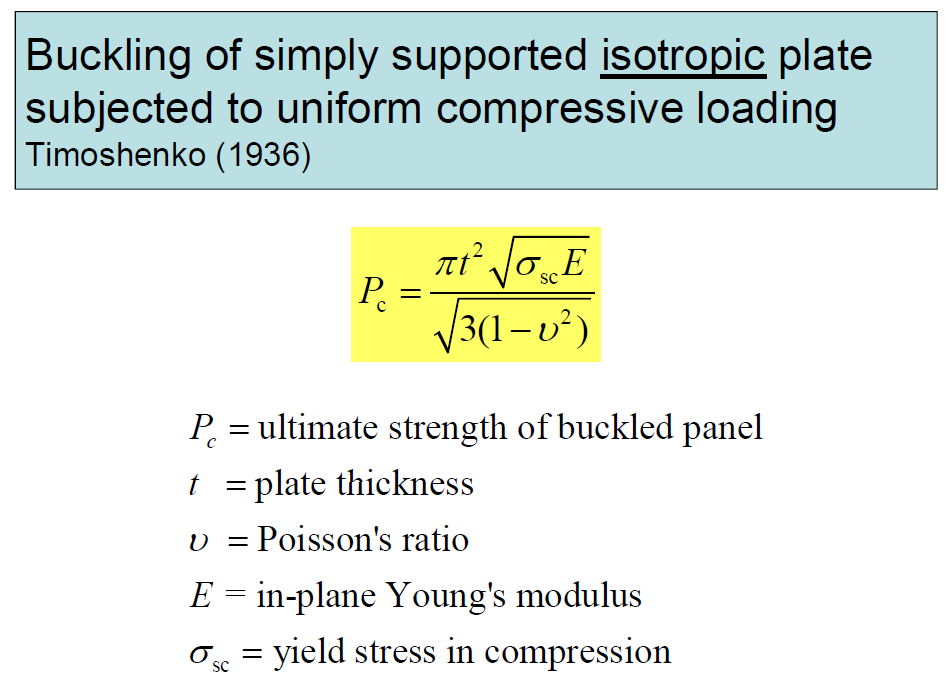
I want to do buckling analysis of Paper box. Which Material law is useful for this purpose and what material properties needed?
Hello, I want to do buckling analysis of Paper box. Which Material law is useful for this purpose and what material properties needed?
My question: Can you do 'buckling analysis' with simple beam analytically? Do you have some theorical knowledge about this suject before doing with numerical?
not much....... but have some ideas to calculate. If u have some techniques and knowledge, I would like to learn.
<?xml version="1.0" encoding="UTF-8"?>
Hi @George P Johnson
Can you please help me regarding my query
Hi,
Is the material model a cardboard package (corrugated material) which you have referred as 'paper box'?.
If so, for the corrugated cardboard material, it maybe better to use elasto-plastic material. Another solution to better model the corrugated cardboard material is to use solid elements with honeycomb material (LAW28, 50 or 68).
Hello @George P Johnson
Thank you...
Material model is cardboard paper only. but not corrugated. It is simply cardboard paper for packaging carton. And thickness is very small.
In this case you can try with an elasto plastic material model.
Sorry, I don't think you need an 'elasto plastic' material for ... paper!
I think all you need is 'linear buckling' analysis. So look for elastic material. Due to structure of paper box, maybe you need composite model?
Hiiii,
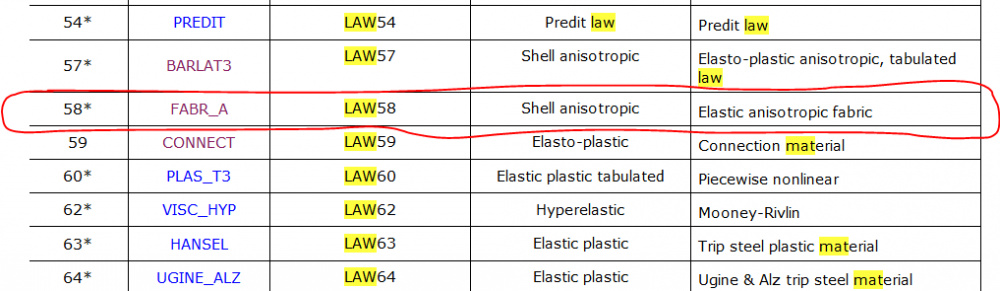
There is material law LAW 58 which is for fiber like structure. As paper material is fiber structure and behavior is also an-isotropic can I use LAW 58 for paper?
I'm not sure whether fabric material can be used for modelling paper. But do you have all the inputs for this material law?.
If you have, then you can give a try.
Join us for a community conversation on how High-Performance Computing (HPC) and Simcenter PSIM work together to meet the increasing demands of modern power electronics simulation. During this one-hour technical session, you'll discover how leveraging HPC can speed up simulations, improve scalability, and empower engineers…
Join us for a community conversation on accelerating your motor simulation workflow with Simcenter Simlab. In this beginner-friendly session, we'll introduce the platform's automated model-building capabilities and show how easy it is to set up your first electric motor analysis. You'll see the basic steps of geometry…
Join us for a Community Conversation where we'll discuss practical approaches to analyzing complex electromagnetic models using hybrid solver techniques. This session will provide a general overview of how different computational methods can be combined within a single simulation to address models containing varied…