The Siemens Community Catalyst program was co-created with our community to acknowledge technology leaders who consistently contribute to the Siemens Community. Nominations are accepted on a rolling basis.
Hello,
is it possible to analyze buckling and the deformation of 1D PBEAML elements? If, which steps are necessary?
Thank you!
Dave
Hi,
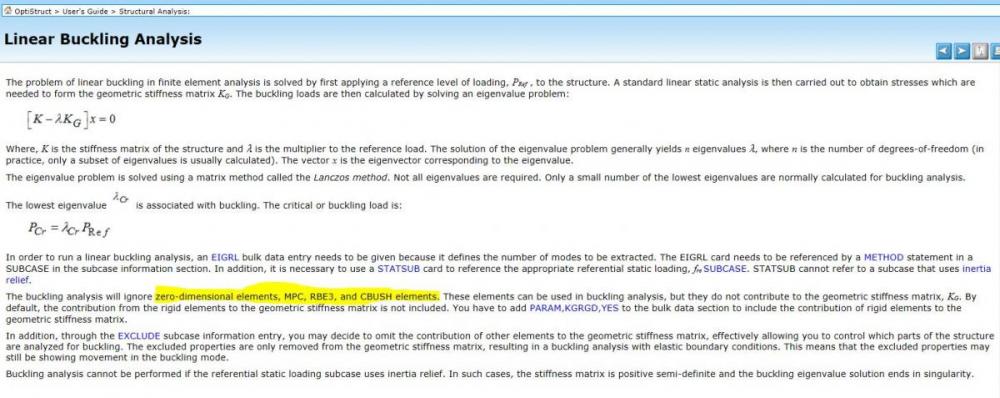
From the documentation of Optistruct user guide it looks like that it should work. Attached is the screenshot of user guide & highligted element will be ignored for buckling analysis.
Please give try using Pbeaml element.Step by step tutorial is available in Optistruct tutorial for buckling analysis using solid elements.
Regards
Rahul R
<?xml version="1.0" encoding="UTF-8"?>
Hi Rahul,
thanks, but the big question is - how? I used Pbeaml's, but there is no buckling information available if I do a EIGLR analysis! Do you have any further information or maybe experience on that?
Best regards,
hi dave,
what loadstep did you define for this?. select type as linear buckling type. In STATSUB option select the first loadstep, if you have any other load atep defined, and in METHOD(STRUCT) select the EIGRL card you have created.
hope this works.
Hi sbx626,
linear buckling is defined. The buckling loadstep is working and delivers results for 2D elements. But there are no solutions for all used 1D elements /emoticons/default_sad.png' alt=':(' srcset='/emoticons/sad@2x.png 2x' width='20' height='20'>
Thanks for your support,
please make sure that you selected the correct loadstep/subcase from the result browser in HV. It is possible to view the result for 1-d elements in linear buckling analysis.
Hello sbx626,
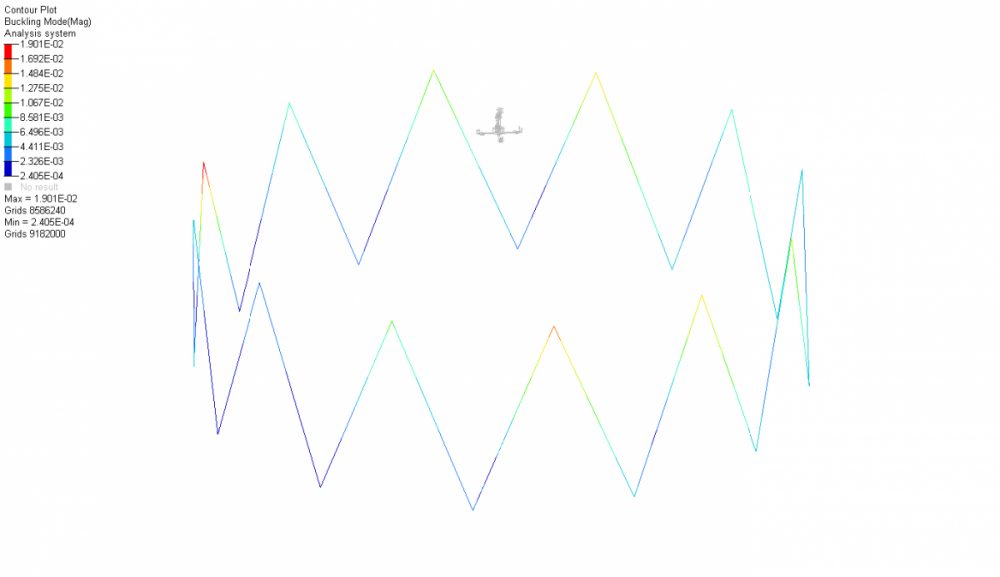
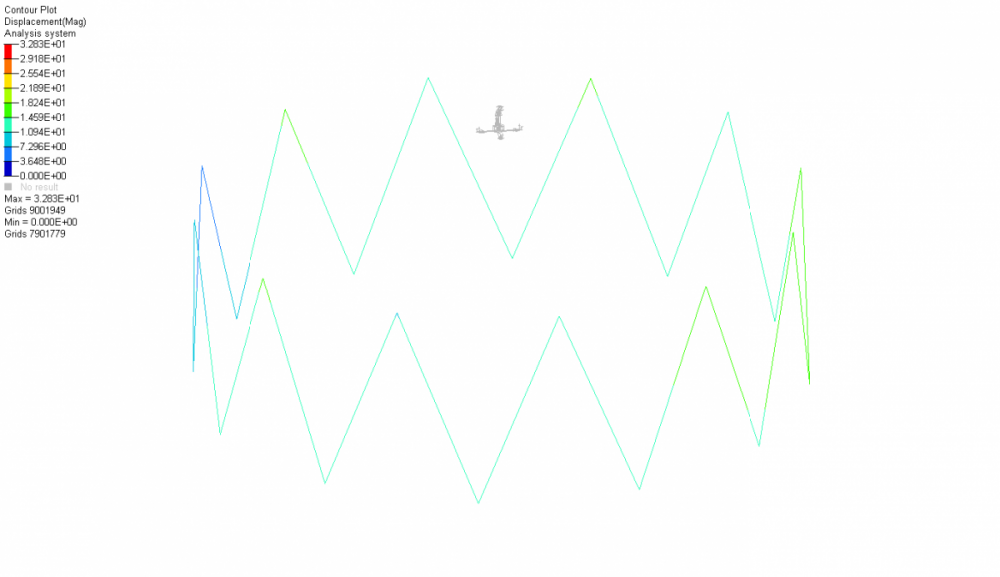
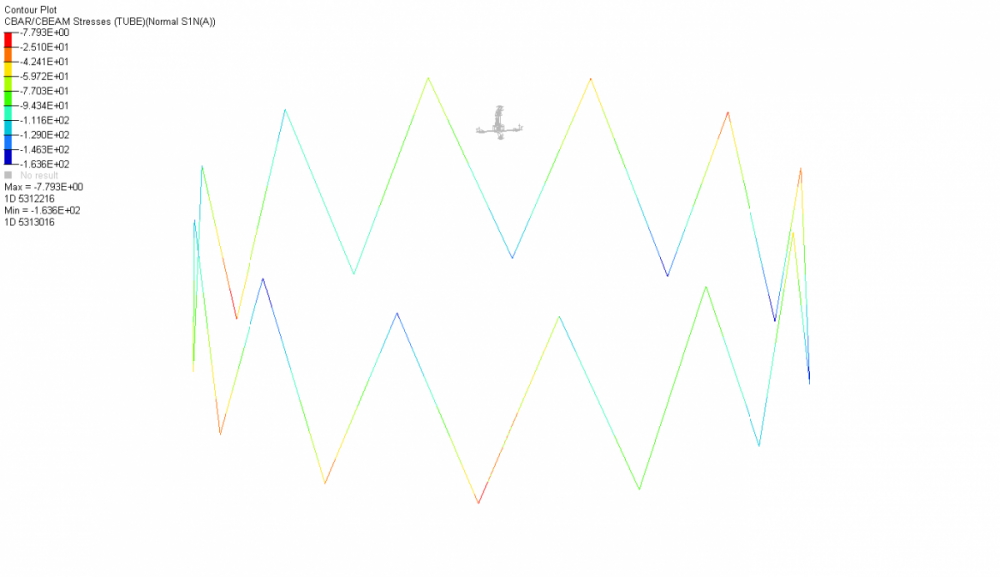
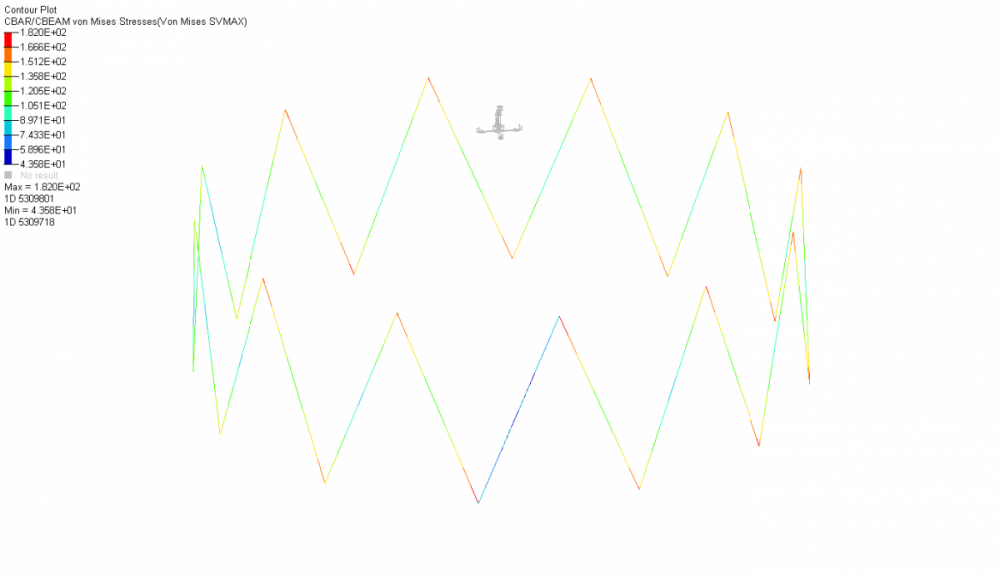
thanks for your support! I think the setup is okay. Now I get displacement, stress and buckling values. The CBAR/STRESS under result type of the contour plot is showing negative values. What does that mean?
Here are a few screenshots, with obtained results:
Dave,
A buckling mode with a negative buckling load factors means the load direction must be reversed for buckling to happen.
The load direction should exactly cause buckling. Most critical / relevant load cases were selected, like this |-. Sorry but this can't be the problem in this case.
Join us for a community conversation on how High-Performance Computing (HPC) and Simcenter PSIM work together to meet the increasing demands of modern power electronics simulation. During this one-hour technical session, you'll discover how leveraging HPC can speed up simulations, improve scalability, and empower engineers…
Join us for a community conversation on accelerating your motor simulation workflow with Simcenter Simlab. In this beginner-friendly session, we'll introduce the platform's automated model-building capabilities and show how easy it is to set up your first electric motor analysis. You'll see the basic steps of geometry…
Join us for a Community Conversation where we'll discuss practical approaches to analyzing complex electromagnetic models using hybrid solver techniques. This session will provide a general overview of how different computational methods can be combined within a single simulation to address models containing varied…